Attic Ventilation and Maryland Humidity: The Hidden Reason Roofs in Baltimore and Howard County Wear Out Early
If your roof fails before it should do according to its age, it’s easy to blame the last big storm that passed over or the age of the shingles. Sometimes, that’s fair. But in our experience, made up of decades working on roofs in Baltimore and Howard County, we’ve found that another cause is often to blame.
The attic.
Maryland is tough on attics. We’ve seen a lot of attics at CRG Roofing & Siding, so we can tell you that the hot, humid summers and cold winters, sometimes seeing huge changes in conditions in the space of a few months, can cause serious problems. An attic that is poorly ventilated can get hit by both hot and cold, and your shingles can pay the price. That’s why good attic ventilation in Maryland matters more than most homeowners realize.
Let’s take a closer look at what’s going on and how to tell if your attic is the problem.
How Poor Ventilation Shortens Shingle Life
Your roof is a system that consists of shingles on the outside. Beneath these, you have underlayment, decking, insulation, and vents, and they all work together.
Our team has seen a lot of roof systems, and when air can’t move through, heat and moisture get trapped, and this affects the whole system. This has several potential negative effects:
- Shingles age faster because the heat bakes them from above and below.
- The roof decking gets warped due to long-term moisture.
- Mold and mildew grow on rafters and insulation.
- Your HVAC has to work harder, leading to higher energy bills.
- Ice dams form in winter because the warm attic melts the snow from underneath.
These problems may not look particularly dramatic at first, and they can be very subtle. But this is the danger because the problem is often missed until you need a roof replacement way ahead of schedule.
Summer Heat Buildup and Winter Condensation

Ventilation issues depend on the season, and both summer and winter can cause problems in your attic.
Summer
It’s the heat and humidity that do the damage in the summer. An unvented attic can get very hot, even hotter than the outside air, and this conducts up into the shingles. This hot attic shingle damage dries out the oils over time that keep shingles flexible, leads to curling and cracking, and can cause excessive granule loss.
Humid air makes the problem worse. Moisture gets trapped in the attic, and this makes it much harder to keep the space cool.
Winter
The bigger risk in winter is condensation. Warm, moist air produced inside the home from showers and cooking goes up into the attic, condenses when it hits a cold surface, like the underside of the roof deck, and leads to attic condensation in winter.
You might be able to see it in the form of frost on the decking, damp insulation, or dark stains on the wood. If well ventilated, the moisture is carried out before it can cause harm. Proper insulation and air sealing prevent it from becoming a problem in the first place.
Intake vs. Exhaust: Why Balance Matters
Proper attic ventilation in Maryland is not just about vents, and it’s more about having the right combination of vents.
- Intake vents allow cooler air outside to come in at the bottom of the attic.
- Exhaust vents let hot, moist air out at the top.
Air flows in low and goes out high up. If you have too much exhaust with not enough intake, the air can’t move properly.
A common guideline is to have about a square foot of vent area for every 150 square feet of attic floor, divided between intake and exhaust vents.
Ridge Vents, Box Vents, and Powered Fans Compared
If you’re comparing ridge vent vs. box vents, here’s how they compare, along with powered fans.
Ridge Vents
These run along the roof’s peak and let hot air escape across its length. They’re very effective and have a low profile.
Box Vents
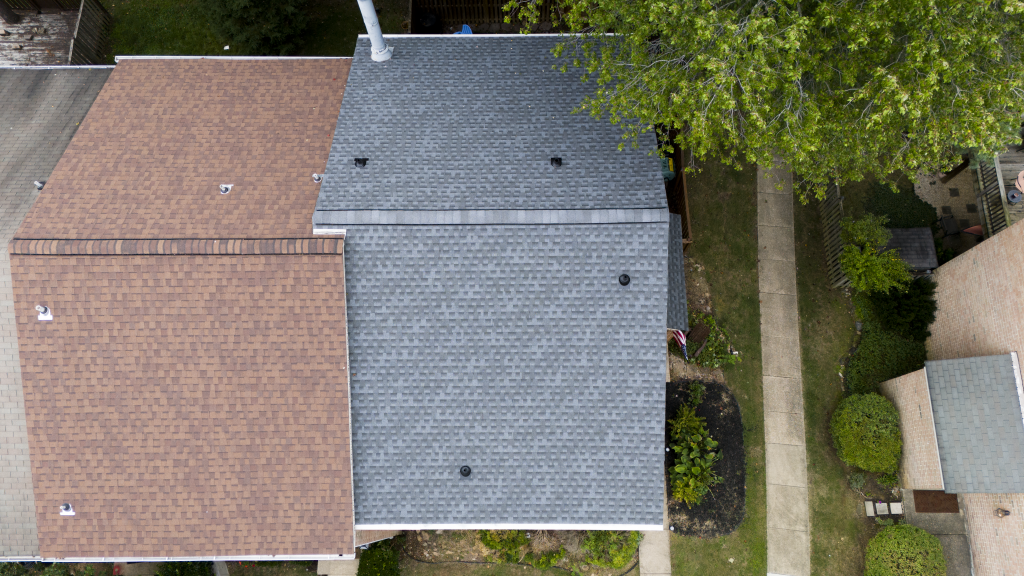
These are individual vents that are spaced across the roof. They’re good when you have enough of them and when there is sufficient intake, but they cover less area and involve more roof penetrations, which results in more places to maintain.
Powered Attic Fans
Powered fans pull the air out mechanically. They can be effective, but if you don’t have enough intake, the fan could pull conditioned air from your living space or even draw moisture in.
How Ventilation Affects Warranty Eligibility

This is an issue that many homeowners miss. Shingle manufacturers expect the roof to be ventilated properly, otherwise this can limit your coverage.
If damage is found to have come from ventilation problems, your manufacturer might decline your claim. Check your warranty and ask your contractor about attic ventilation to make sure you’re doing what you need to.
Signs to Look for in Your Own Attic
It’s worth checking yourself, as long as you can get into your attic safely. Take a flashlight up on a bright day and look for:
- Damp insulation
- Frost or moisture on the underside of the deck
- Rusty nails
- Mold or mildew
- Musty smell
- Insulation blocking the vents
Outside your property, look for curling shingles, excessive granules in the gutters, and uneven snow melt on the roof.
Let Us Take a Look
Don’t guess what’s happening, and instead get your roof checked by the experts. During our roof inspections, we check the whole system, including your attic ventilation, not just the shingles, to give you a full picture of your roof’s health.
Find out more by contacting us today. We’ll answer all your questions and give you a free estimate.